













SEMYON ISAEVICH SNITKOVSKY — TRIBUTE VOLUME 1
LIVE AT THE TIBOR VARGA FESTIVAL, 1973
Some recordings preserve a performance. Others seem to reopen the room in which it happened.
Recorded live on 20 July 1973 inside the Jesuit Church in Sion, Switzerland, Tribute Volume 1 captures Soviet violinist Semyon Isaevich Snitkovsky with distinguished Swiss pianist Gerard Wyss during the Tibor Varga Festival. The previously unreleased programme pairs two contrasting works:
🎼 Edvard Grieg — Violin Sonata No. 2 in G major, Op. 13
🎼 Karen Khachaturian — Violin Sonata in G minor, Op. 1
The Grieg Sonata opens a world of Nordic lyricism, tenderness and sudden rhythmic fire. Snitkovsky’s violin line appears to sing rather than merely play: phrases breathe, silences retain their tension, and the transitions from introspection to passion feel spontaneous yet completely controlled.
Khachaturian’s Sonata brings a darker and more angular character. Its restless energy, Armenian-inflected colours and percussive exchanges place greater emphasis on rhythmic instinct. Here, Snitkovsky and Wyss do not behave like soloist and accompanist—they operate as equal partners, passing intensity and momentum between violin and piano.
Snitkovsky was far more than an accomplished virtuoso. A former student and later assistant of David Oistrakh, he won first prize at the 1958 George Enescu Competition, took second prize at the 1963 Queen Elisabeth Competition and received the Eugène Ysaÿe Foundation’s gold medal in 1967. His career was cut tragically short in 1981, aged only 47, leaving Western collectors with far fewer recordings than an artist of his stature deserved.
That scarcity gives this recovered concert particular historical importance—but its musical value is greater still. Snitkovsky combined tonal beauty and technical command with an unusually vocal style of expression. His playing could move from delicacy to explosive power without losing its sense of line. Wyss responds with refinement, weight and remarkable sensitivity, allowing the music to unfold as a genuine conversation.
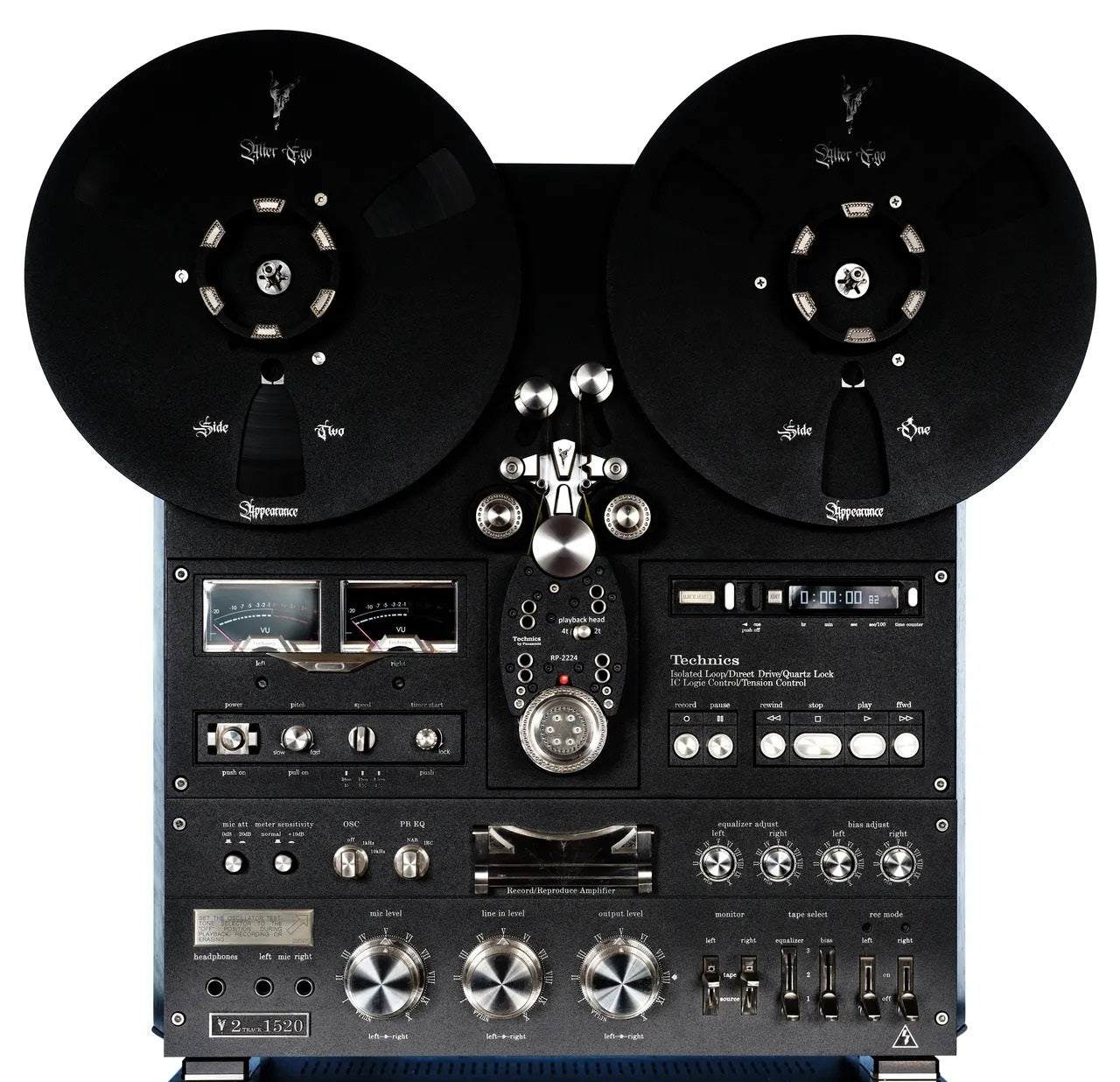
The original recording was reportedly made through an all-analogue signal path using Neumann and Schoeps microphones, Telefunken V76 valve preamplifiers and a Studer C37 valve tape recorder. Triston Masters produced the vinyl directly from the original master tape, without digital processing, as a limited audiophile edition of only 300 copies.
Rather than polishing away the atmosphere of the occasion, the recording allows the acoustic of the church to become part of the performance. The violin possesses body, texture and natural harmonic colour; the piano has believable scale and physical weight. Most importantly, the two instruments occupy a coherent space instead of sounding artificially separated.
This is what a fine archival analogue release should achieve: not exaggerated “hi-fi effects,” but presence, proportion and emotional truth.
Tribute Volume 1 is consequently much more than a demonstration record. It is a rediscovered musical document—an intimate encounter with an exceptional violinist whose reputation deserves to extend far beyond specialist circles.
For collectors of historic violin playing, fully analogue recordings and naturally captured concert acoustics, this is an album of genuine significance.
💬 DISCUSSION
Had you heard of Semyon Snitkovsky before discovering this recording?
And when listening to a historic live performance, what matters most to you: absolute technical perfection, the natural acoustic of the venue, or the emotional electricity of the moment?
Share your thoughts below.
 Пообщайтесь с нами
