












CANTATE DOMINO - WHEN A CHURCH BECOMES PART OF THE MUSIC

|
Oscar’s Motet Choir • Torsten Nilsson • Alf Linder • Marianne Mellnäs

|
Special Numbered UHQCD Silver-Alloy Edition
AudioNautes Recordings AN-2104-UHQ • Made in Japan

|
Few classical recordings survive for half a century as both musical treasures and international audiophile references.
Cantate Domino is one of them.

|
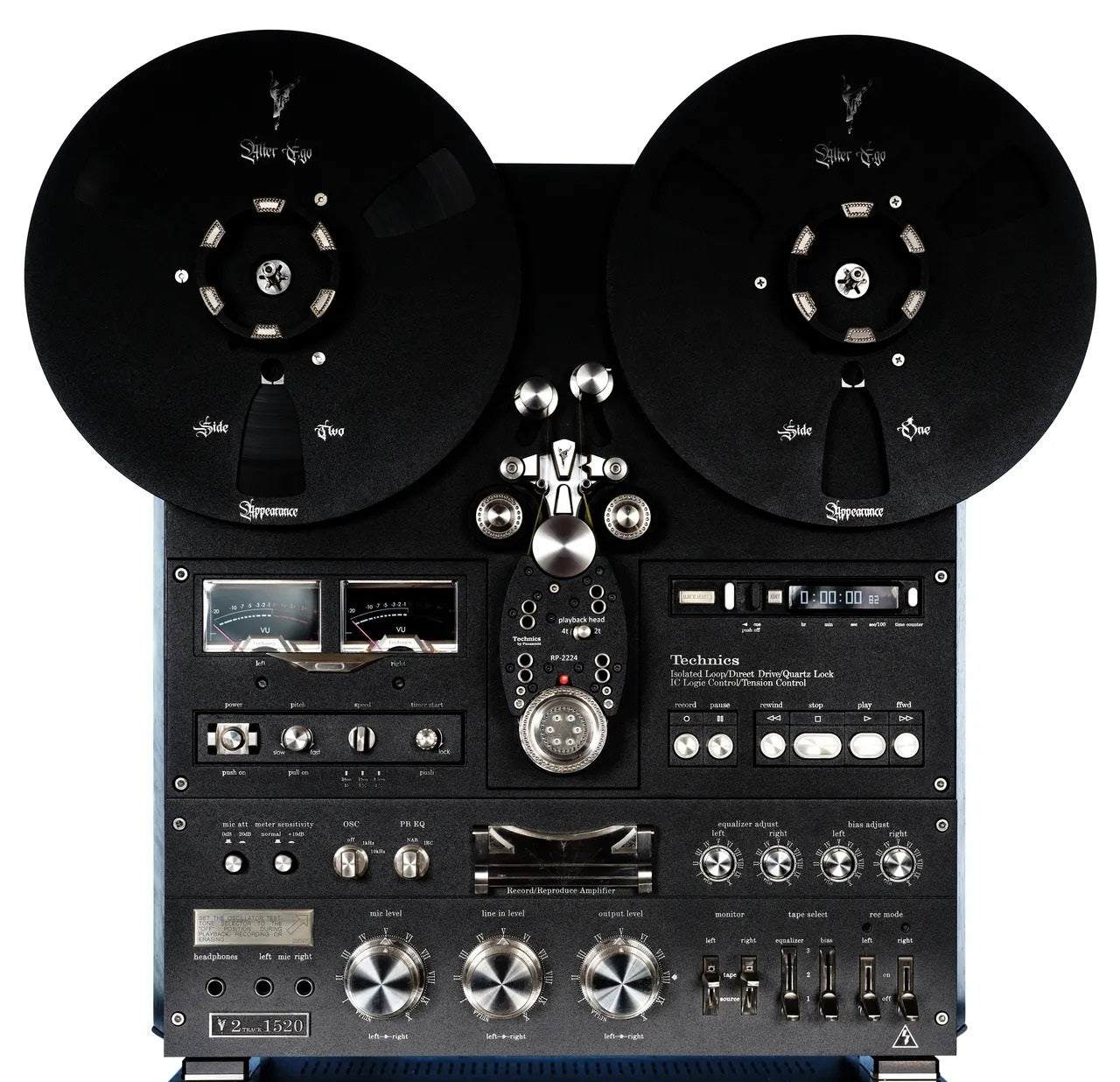
Originally released by the Swedish Proprius label in 1976, this celebrated recording has travelled through generations of LP, CD, XRCD, K2HD, SACD, high-resolution digital and reel-to-reel editions. Yet its enduring fascination is not merely the result of rarity, packaging or audiophile reputation.
The real magic lies in something more fundamental: the illusion that the listener has been transported directly into Oscarskyrkan in Stockholm.
⛪ THE RECORDING VENUE
The recording sessions took place inside Oscarskyrkan—Oscar’s Church—in Stockholm. Discographical records identify sessions held from 23–25 January 1976, with three additional selections recorded on 29 April.
This was not simply a convenient recording location. The church became an essential musical participant.
Its resonant acoustic surrounds the choir, allows the organ to develop its full scale and gives every phrase a long, natural decay. Listen closely after the final chord of “Hosianna, Davids son”: the performers stop, but the building continues the music as the sound slowly disappears into the architecture.
That is one reason Cantate Domino remains so effective as a system demonstration. It reveals whether a system can reproduce not only voices and instruments, but also the air, distance and acoustic boundaries surrounding them.
🎙️ BERTIL ALVING — THE ENGINEER BEHIND THE LEGEND
The recording engineer was Bertil Alving, working with producer Jacob Boëthius.
A detailed historical account describes an exceptionally direct recording chain: two Pearl TC-4V microphones arranged as a spaced A–B pair, feeding a custom-built microphone preamplifier and a modified ReVox A77 Mk III tape recorder.
Instead of constructing an artificial soundstage from numerous closely positioned microphones, Alving’s minimalist approach preserved the relationship between the performers and the church.
The result is not an exaggerated “hi-fi spectacular.” It is a coherent acoustic event.
The choir occupies a natural plane across the soundstage. The organ develops behind and beneath the voices. Brass emerges with brilliance without becoming detached from the ensemble. Reflected sound belongs to the same environment as the direct sound.
This deceptively simple engineering is central to the recording’s realism. Audiophilia’s detailed retrospective describes the same qualities: extraordinary space, scale, dynamic range and the unusually convincing sensation of hearing a performance unfold inside the church.
🎶 THE PERFORMERS
At the heart of the recording is Oscar’s Motet Choir—Oscars Motettkör—under conductor and chorus master Torsten Nilsson.
Nilsson shapes the ensemble with impressive discipline, but the performances never sound mechanically controlled. The voices expand naturally, moving from devotional intimacy to tremendous choral power without losing clarity or tonal beauty.
Alf Linder, one of Sweden’s distinguished organists, provides the recording’s architectural foundation. His instrument can be delicate, colourful and almost weightless, but when the lowest registers arrive, they seem to energise the church itself.
Soprano Marianne Mellnäs brings extraordinary purity to the solo selections. Her voice is not pushed unnaturally towards the listener. It is allowed to exist within the church acoustic, surrounded by air and reverberation.
Trumpets and trombones add ceremonial brilliance to the larger works, particularly the opening “Cantate Domino” and “Hosianna, Davids son.”
The verified principal credits are:
• Oscar’s Motet Choir — choir
• Torsten Nilsson — conductor and chorus master
• Alf Linder — organ
• Marianne Mellnäs — soprano
• Bertil Alving — recording engineer
• Jacob Boëthius — producer
• Recorded at Oscarskyrkan, Stockholm, in 1976
The official Naxos catalogue documents the performers, composers, repertoire and original Proprius catalogue lineage.
🎵 THE MUSICAL JOURNEY
The programme crosses centuries and national traditions.
It opens with Marco Enrico Bossi’s commanding “Cantate Domino,” scored for choir, organ and brass. The organ introduction establishes the scale of the church before the choir enters and the entire acoustic appears to open behind the loudspeakers.
Johann Gottfried Walther’s Organ Concerto in A major gives Alf Linder an opportunity to reveal the colour, articulation and noble character of the instrument.
Otto Olsson’s “Advent,” Handel’s “Dotter Sion, fröjda dig” and Georg Joseph Vogler’s “Hosianna, Davids son” move between intimate devotion and ceremonial splendour.
Traditional Swedish, Korean, French and Czech melodies broaden the programme, alongside Adolphe Adam’s “O Holy Night,” Franz Gruber’s “Silent Night,” Max Reger’s “Mariae Wiegenlied” and Otto Olsson’s organ work “Jul.”
The concluding “White Christmas” may appear unexpected after so much sacred repertoire, but its lighter character provides a warm and distinctly human farewell.
The complete programme lasts approximately 45 minutes.
🔊 WHAT DOES CANTATE DOMINO REVEAL?
This is a recording capable of testing nearly every important quality of an audio system:
• Soundstage width and depth
• Image placement and choral layering
• Low-frequency extension from the organ
• Dynamic freedom during large climaxes
• Vocal purity and natural sibilance
• Brass energy without hardness
• Resolution of reverberation and decay
• The transition from individual voices to a unified choir
• The ability to reproduce scale without congestion
On a carefully balanced system, the opening organ does not merely sound deep—it creates the impression of a large body of air beginning to move.
When the choir enters, the presentation expands beyond the loudspeakers. Marianne Mellnäs appears within the same acoustic rather than being artificially spotlighted. At the largest climaxes, choir, organ and brass remain distinguishable while still forming one musical event.
A Positive Feedback review characterised the recording through its realism, enveloping soundstage, wide dynamics, resolution and tonality. Another long-term assessment concluded that the album endures because its sonic excellence creates an unusually persuasive illusion of attending a real performance.
But its greatest achievement arrives when we stop analysing those qualities.
The equipment disappears. The room disappears. For a few minutes, we are simply sitting inside Oscarskyrkan.

|
💿 WHY THIS UHQCD EDITION?
This AudioNautes Recordings edition is presented as a numbered limited release of only 1,111 copies, manufactured in Japan with:
• UHQCD construction
• High-reflectivity silver-alloy layer
• Direct original-analogue-master-tape provenance
• Rigid luxury gatefold presentation
• Individually numbered certificate
• Compatibility with conventional CD players
Unlike an ordinary injection-moulded CD, the UHQCD process uses a liquid photopolymer to reproduce the stamper’s microscopic pit structure. It is cured using light, allowing the material to flow more precisely into the tiny details of the stamper. The format remains fully compatible with standard CD players.
The official UHQCD technical explanation states that this manufacturing method is designed to achieve more accurate pit replication, while the reflective layer uses a high-reflectivity alloy rather than conventional aluminium.
It is important to keep this claim in perspective: UHQCD does not increase the Red Book CD resolution, and the mastering remains crucial. The strongest reason to consider this edition is therefore the complete combination—master source, mastering decisions, physical manufacturing quality and playback compatibility—not the acronym alone.
Listener feedback concerning UHQCDs in general ranges from reports of smoother textures, more continuous note decay and greater refinement to listeners who hear little or no change when the digital mastering is identical. That disagreement is healthy. It reminds us that system resolution, transport behaviour, mastering and listening conditions all matter.
The only meaningful verdict is the one reached in your own listening room.
🏆 AN AUDIOPHILE CLASSIC—BUT FIRST, GREAT MUSIC
Cantate Domino has appeared in countless audiophile collections because it can demonstrate what a serious system is capable of doing.
But treating it only as a collection of test signals misses the point.
The recording has endured because the performances possess sincerity, dignity and emotional conviction. The engineering does not call attention to itself; it removes barriers between the listener, the musicians and the venue.
That is the real definition of high fidelity.
Not more treble.
Not exaggerated bass.
Not an artificially enormous soundstage.
High fidelity is the moment when reproduced sound becomes believable enough for us to forget that it is being reproduced.
Cantate Domino still creates that moment nearly fifty years after Bertil Alving pressed record.
💬 DISCUSSION TIME
Have you heard Cantate Domino on LP, standard CD, XRCD, K2HD, SACD, UHQCD, high-resolution digital or master tape?
Which edition gives you the most convincing impression of Oscarskyrkan?
Do you hear meaningful differences between UHQCD and a conventional CD when the mastering is identical—or do you believe that the mastering is everything?
And which track would you choose to demonstrate the full capabilities of an audio system?
Share your edition, playback system and listening impressions below.
Explore the numbered AudioNautes UHQCD edition at The Sound of Tape.
 |
Oscar's Motet Choir - Cantate Domino - UHQ-CD Edition
 Пообщайтесь с нами
