












AUDIONAUTES RECORDINGS
WHEN AN AUDIO ENGINEER ASKED: “CAN WE DO IT BETTER?”
Some record labels begin with a business plan. AudioNautes Recordings began with a question.
Fabio Camorani - an Italian electronic engineer, passionate audiophile and serious record collector - owned multiple editions of many of his favourite albums. When he compared them, he discovered that records made from the same performance could sound remarkably different.
Each edition appeared to carry the sonic interpretation of its label, mastering engineer and manufacturing process.
That observation led to a deceptively simple question:
“Can we do it better?”
The answer became AudioNautes Recordings.
THE STORY BEFORE THE RECORD LABEL
The AudioNautes story began before its first record was pressed.
During the 1990s, Fabio Camorani became involved in specialist valve amplification and audio engineering. In 1994, he published an article about an unusual OTL monoblock amplifier developed with Mirko Bersani. His work brought him into contact with Harvey “Gizmo” Rosenberg, founder of New York Audio Laboratories, and the influential American publication Sound Practices.
As more enthusiasts approached him for advice about improving their equipment, Camorani began offering modifications for CD players and amplifiers. AudioNautes was formally established in 2000.
The company subsequently developed uncompromising amplifiers, preamplifiers and loudspeakers. Camorani also founded AudioNemesis, whose highly regarded DC-1 digital-to-analogue converter demonstrated his belief that carefully engineered high-fidelity sound did not always require extravagant complexity.
AudioNautes also distributed some of the world’s finest audiophile records, including the celebrated Three Blind Mice 45rpm “Super-Cut Analogue Disk” editions produced by Cisco Records.
These highly dynamic Japanese recordings profoundly influenced Camorani’s understanding of what truly convincing reproduction could achieve: not merely detail, warmth or impressive bass, but the sensation of being present at the musical event.
FROM HIGH-END AUDIO TO RECORD PRODUCTION
By 2010, Camorani was ready to turn years of listening, collecting, engineering and distribution experience into a record label.
AudioNautes Recordings was founded with a distinctive purpose: to create the finest possible editions of exceptional recordings—whether internationally celebrated, almost forgotten or unjustly overlooked.
The label would not simply choose famous titles with guaranteed commercial appeal. The music had to be worthwhile, the original recording had to possess outstanding potential, and a suitable authoritative source had to be available.
AudioNautes’ first planned production was Vivaldi’s Le Quattro Stagioni, performed by Giuliano Carmignola and Sonatori de la Gioiosa Marca. Camorani approached the Swiss label Divox, but the project took longer to arrange than expected.
Instead of postponing the birth of the label, he turned to another recording he deeply admired: Flûte de Pan et Orgue by Romanian pan-flute virtuoso Gheorghe Zamfir and Swiss organist, producer and ethnomusicologist Marcel Cellier.

|
A FORGOTTEN RECORDING BECOMES AN-1001
Camorani wrote to Disques Cellier to propose an audiophile reissue. Then something unforgettable happened: Marcel Cellier telephoned him personally.
The two men spoke at length. Cellier called again and invited Camorani to visit him in Switzerland. That meeting became the beginning of the AudioNautes recording adventure.
Flûte de Pan et Orgue: Live/Direct brought together the haunting, breath-like expression of Zamfir’s pan flute and the power, scale and reverberant majesty of Cellier’s pipe organ. It was an unusual musical partnership captured with tremendous atmosphere and immediacy—the kind of recording capable of transporting a listener beyond the loudspeakers and into the original acoustic space.
It was precisely the type of overlooked treasure AudioNautes wanted to restore to serious attention.
The reissue was entrusted to legendary mastering engineer Stan Ricker, one of the great specialists in half-speed mastering. Released in 2010 as a limited, individually numbered 33⅓rpm vinyl edition, it carried the catalogue number:
AN-1001
That number represented much more than the beginning of a catalogue. It established the philosophy that would define every AudioNautes project that followed.

|
THE SOURCE COMES FIRST
AudioNautes Recordings works from original session tapes, original master tapes, original digital files or, when the original cannot be released, an exceptionally good authorised professional copy.
If an appropriate source cannot be obtained, the label does not proceed.
This principle distinguishes a true audiophile reissue from a product created using an existing commercial remaster of uncertain origin. AudioNautes does not begin with a finished remastered edition and merely place it onto a more prestigious carrier. It returns as close as possible to the recording itself.
However, “purity” does not mean connecting a master tape to a cutting lathe and assuming that the result must automatically be perfect.
Historic tapes can contain variations in phase, frequency response, level and editing. Ageing can introduce further imbalances. Session tapes may preserve the most direct material, but they can also contain faults that must be understood and treated sensitively.
The objective is therefore not to impose a fashionable house sound or to make every recording louder, brighter and more immediately impressive.
The objective is to reveal what is already present in the source without destroying its musical identity.
THE ART OF MASTERING
Every AudioNautes production is approached as an individual project.
The team listens repeatedly, evaluates the strengths and weaknesses of the source, performs trials and compares the results on reference systems. Adjustments are made only when their benefits outweigh the possibility of losing something musically important.
For analogue recordings, the label’s mastering remains within the analogue domain whenever appropriate. Even the production of a vinyl lacquer may require several attempts because the physical groove cannot always accommodate everything contained on the tape without careful judgement.
This combination of engineering knowledge, musical sensitivity, specialist equipment and repeated experimentation is summarised by AudioNautes as the “3M” principle:
MONEY.
MASTERING.
MACHINES.
Producing exceptional sound requires all three—but it also requires something that cannot be purchased so easily: the ability to recognise when the reproduction finally feels musically right.
THE PURSUIT OF “BEING THERE”
AudioNautes does not attempt to manufacture a recognisable label sound.
Its ambition is more demanding: to recreate the character of the original performance and allow each recording to retain its own identity.
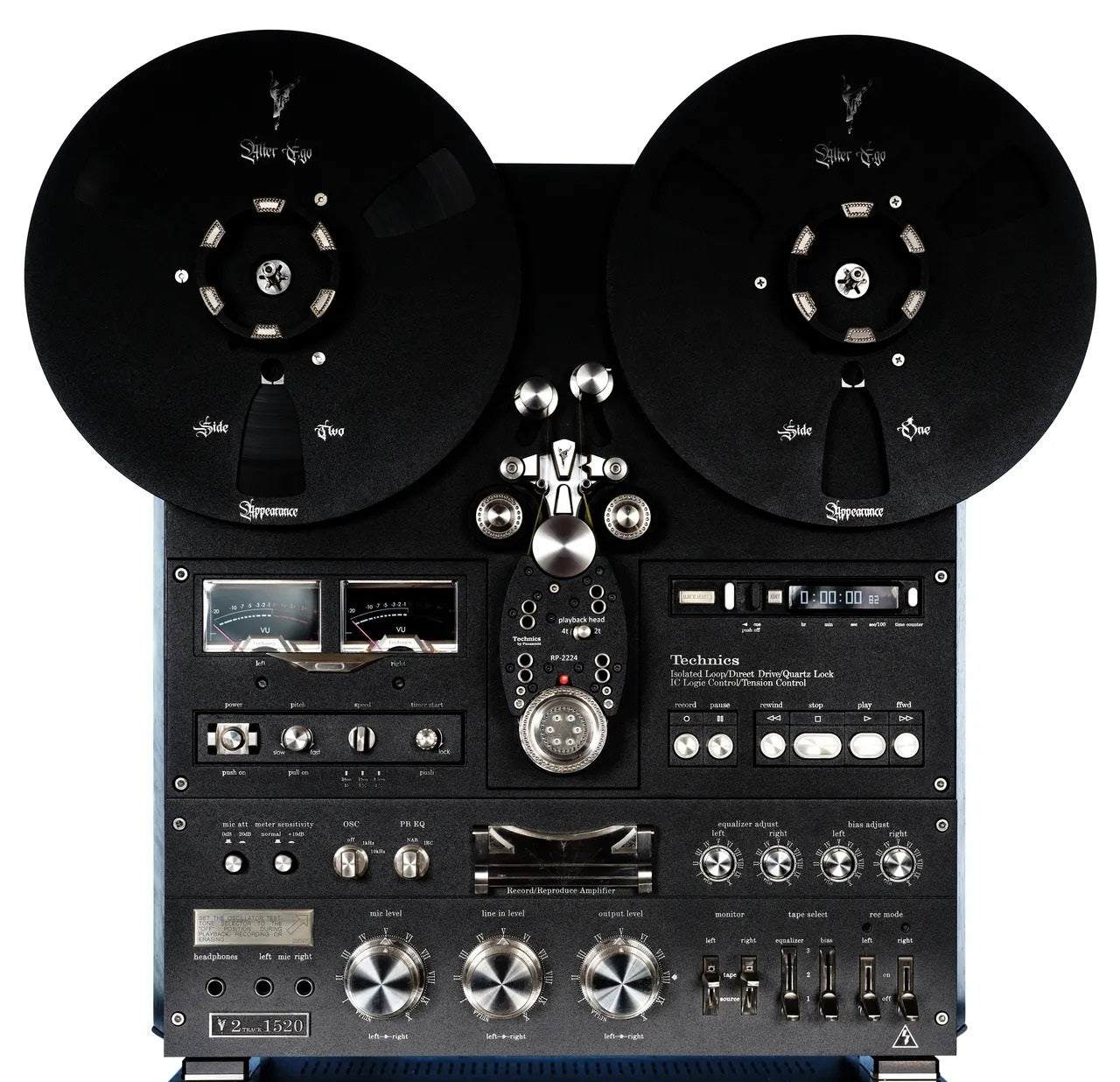
The label’s catalogue now encompasses audiophile LPs, 45rpm and one-step editions, UHQCDs, Crystal Discs and 1:1 reel-to-reel master-tape copies. The formats may differ, but the philosophy remains consistent.
The source must be authoritative.
The music must deserve preservation.
The mastering must serve the recording.
The physical edition must be worthy of the work.
From the first AN-1001 pressing to today’s extraordinary premium productions, AudioNautes Recordings has followed the question that inspired its creation:
Can we do it better?
For Fabio Camorani and his team, the answer is never expressed through advertising alone. It must be heard - in the natural timbre of an instrument, the scale of the recording venue, the movement of air around a performer and the fleeting illusion that the musicians are no longer being reproduced.
They are simply there.
AudioNautes Recordings - where recovering a forgotten master is not an exercise in nostalgia, but an act of musical preservation.
🎶 Excellence is the standard. Enjoy the music.

|
#AudioNautesRecordings #FabioCamorani #AudiophileMusic #VinylRecords #MasterTape #ReelToReel #UHQCD #CrystalDisc #AnalogueSound #HighFidelity #AudiophileVinyl #MusicPreservation #TheSoundOfTape #OpenReelToReel
