












![75th Anniversary Collection Album [UHQCD]](http://www.thesoundoftape.com/cdn/shop/files/UHQCD_600x600_cover_front_80x80.png?v=1791014990)
![75th Anniversary Collection Album [2xLPs]](http://www.thesoundoftape.com/cdn/shop/files/LP_600x600_cover_front_80x80.png?v=1791014367)


Top 10 Greatest Reel-to-Reel Tape Decks Ever Made
The Definitive Collector’s Guide
There was a period when the reel-to-reel tape recorder represented the absolute summit of recorded sound.
Before high-resolution digital files, streaming services and computer-based recording became dominant, magnetic tape was the medium on which much of the world’s most important music was captured, edited, mastered and archived. In professional studios, broadcast facilities and serious home listening rooms, the spinning reels of an open-reel machine represented something more than another audio format. They represented the recording itself.
Today, the greatest reel-to-reel machines occupy a fascinating position between professional instrument, industrial sculpture and collectible object.
Some were created for mastering studios. Others were designed for broadcasters, location recordists or demanding audiophiles. A few attempted to bring professional tape performance into the domestic listening room with spectacular engineering and equally spectacular aesthetics.
The following ten machines form the selection presented in “Top 10 Greatest Reel-to-Reel Tape Decks Ever Made.” (YouTube)
What makes the list particularly interesting is its diversity. It includes Japanese statement machines, Swiss precision recorders, American studio workhorses and some of the most sophisticated professional tape transports ever constructed.
This is not simply a list of old tape recorders.
It is a journey through the golden age of magnetic recording.
10. Sony TC-880-2
Sony’s extraordinary statement machine
Among vintage Sony open-reel recorders, the TC-880-2 has acquired almost mythical status.
This was Sony demonstrating what could be achieved when the company approached reel-to-reel recording with very few compromises.
The TC-880-2 was conceived as a serious two-channel machine rather than an ordinary domestic recorder. It uses separate reel motors and a dedicated capstan motor, accepts reels up to 10.5 inches and was designed around high-performance recording and reproduction. (HiFi Engine)
Its appeal today goes far beyond specifications.
The Sony has presence.
Large reels dominate the front panel while the controls, meters and transport arrangement create the unmistakable appearance of late-period Japanese high-end engineering. It feels closer to laboratory equipment than ordinary home audio.
Collectors are particularly attracted to the TC-880-2 because Sony produced comparatively few machines occupying this level of the market. Consequently, finding a complete example in excellent cosmetic condition is considerably more difficult than locating many mainstream Sony decks.
A correctly restored example demonstrates why Sony deserves a place among the major names of open-reel history.
Collector perspective
The TC-880-2 is for the enthusiast who wants something unusual.
Revox may be more familiar. Technics may be more immediately recognisable. Akai may be more flamboyant.
But the Sony possesses an exclusivity that makes it one of the great conversation pieces of a serious reel-to-reel collection.
9. Akai GX-747
The visual icon of Japanese reel-to-reel
If one tape recorder could represent the glamorous final years of the consumer reel-to-reel era, the Akai GX-747 would be among the strongest candidates.
Introduced when the open-reel market was already beginning to contract, the GX-747 was a magnificent final statement from a company deeply associated with tape machines.
Its architecture combines four-track, two-channel stereo operation with large-reel capability and Akai’s celebrated GX head technology. The machine operates at 7½ and 3¾ inches per second rather than the professional 15 ips speed used by many studio machines. (The Vintage Knob)
Technically impressive though it was, appearance became one of the GX-747’s greatest legacies.
The enormous reels, illuminated controls, brushed-metal architecture and symmetrical presentation created an object that looked expensive even when standing still.
Once the reels began turning, it became theatre.
Few reel-to-reel recorders photograph as dramatically.
Few are recognised as quickly.
And few represent the extravagant side of late analogue hi-fi quite so effectively.
Why collectors love it
The GX-747 demonstrates an important distinction within the reel-to-reel world.
The technically most formidable professional recorder is not necessarily the machine that creates the greatest emotional attachment.
The Akai is desirable because it combines performance with ceremony.
Owning one is as much about seeing the machine operate as hearing the tape.
That quality has helped transform the GX-747 from an impressive vintage recorder into a genuine design icon.
8. Nagra IV-S
Precision that travelled anywhere
The Nagra IV-S approaches reel-to-reel recording from an entirely different direction.
Where machines such as the Akai GX-747 were designed to dominate the listening room visually, Nagra’s philosophy developed around professional location recording.
Compactness mattered.
Reliability mattered.
Battery operation mattered.
Mechanical silence, speed accuracy and the ability to capture an irreplaceable performance mattered even more.
The Nagra IV family became closely associated with professional film, television, radio and field recording. Nagra’s professional quarter-inch machines supported the established analogue tape speeds and recording standards required by serious production work. (Nagra)
The IV-S brought stereo recording into the legendary Nagra portable format.
Everything about the machine communicates purpose.
Its rotary controls, modulometer, mechanical transport and extraordinarily dense internal construction make it resemble a precision scientific instrument.
That impression is entirely appropriate.
The Nagra philosophy
A Nagra was never intended to be merely beautiful.
Its beauty emerged from function.
Every control needed to be accessible.
Every mechanical action needed to be dependable.
Every centimetre of space mattered.
For collectors, that functional purity has made classic Nagras some of the most fascinating analogue recorders ever produced.
A Nagra IV-S sitting beside a large studio machine provides a perfect demonstration of how differently engineers could solve the same fundamental problem:
How do we move magnetic tape past a recording head with the greatest possible accuracy?
The answer, in Nagra’s case, was precision made portable.
7. TEAC X-2000R
The sophisticated final generation
By the time the TEAC X-2000R appeared, decades of consumer tape-recorder development could be incorporated into a single highly sophisticated machine.
It is an auto-reverse, four-track stereo deck accepting reels up to 10.5 inches and operating at 7½ and 3¾ ips. Its design incorporates six heads, three motors and features including source/tape monitoring and electronic control. (Vintage Digital)
The X-2000R therefore belongs to a different philosophical world from a Studer mastering machine.
This was not primarily about operating a recording studio.
It was about creating one of the ultimate home open-reel recorders.
Convenience had become part of luxury.
Auto reverse meant extended listening.
Large reels gave the machine visual authority.
Electronic transport controls made operation effortless.
And TEAC wrapped the entire package in the unmistakable appearance of premium 1980s Japanese audio engineering.
Why it matters
The X-2000R represents the mature consumer reel-to-reel recorder.
Earlier machines had established the fundamental technology.
By this stage manufacturers were refining usability, automation and presentation.
For collectors who actually want to use reel-to-reel regularly rather than simply admire a historically significant studio transport, that sophistication remains attractive.
The X-2000R is therefore remembered as one of the great final expressions of domestic open-reel tape.
6. Pioneer RT-909
Industrial design becomes theatre
The Pioneer RT-909 may be one of the most visually recognisable reel-to-reel machines ever created.
Everything about it belongs to the golden age of silver-faced hi-fi.
Its brushed aluminium front panel, large reels, substantial transport controls and illuminated display system create an unmistakable late-1970s appearance.
The machine is a four-track, two-channel stereo recorder using three motors and accommodating reels up to approximately 10.5 inches. It operates at 3¾ and 7½ ips and was designed in a format compatible with standard 19-inch equipment mounting. (Vintage Digital)
But specifications explain only part of the RT-909 phenomenon.
What Pioneer accomplished was to transform a technical object into kinetic design.
When the machine is operating, the reels, meters and illuminated controls create movement across the entire front panel.
The equipment becomes part of the listening experience.
The collector effect
The RT-909 appeals far beyond traditional tape enthusiasts.
Vintage hi-fi collectors want it.
Industrial-design enthusiasts want it.
Pioneer collectors want it.
And people who have never owned another reel-to-reel machine frequently recognise it immediately.
That cross-over appeal is important.
Some machines become historically significant because engineers admire them.
Others become culturally significant because everyone remembers what they look like.
The Pioneer manages to achieve both.
5. Otari MX-5050
The studio workhorse
Moving into the upper half of the list changes the atmosphere.
The machines increasingly become professional tools.
The Otari MX-5050 is perhaps the perfect example.
Unlike many glamorous consumer decks, the MX-5050 was built primarily for serious recording, broadcast and production environments.
Various versions were produced, but the famous professional configurations include two-track stereo operation, large-reel capability and speeds extending to 15 ips. (tonepearls.com)
The Otari’s design philosophy is immediately apparent.
Controls exist because an engineer needs them.
Adjustments are accessible because a studio must align a recorder correctly.
The transport is substantial because the machine may operate for hours every day.
Decoration is secondary.
Reliability is not.
Why the MX-5050 remains important
This machine also illustrates one of the great truths of analogue audio collecting:
The most useful recorder is not always the rarest or most visually dramatic one.
A professional machine with sensible engineering, good serviceability and proper tape-handling capabilities may ultimately be more rewarding than a spectacular domestic deck.
The MX-5050 became respected precisely because it could perform real work.
Today, restored examples remain highly relevant for enthusiasts playing two-track master-quality tape copies.
In a room filled with glamorous vintage machines, the Otari may initially look restrained.
Then the tape starts moving.
Its purpose becomes obvious.
4. Revox B77 Mk II
Swiss engineering for the serious enthusiast
Few names are as inseparable from reel-to-reel recording as Revox.
The company’s relationship with Studer gave its domestic and semi-professional machines an engineering pedigree that distinguished them from conventional consumer audio.
The B77 Mk II represents one of the most mature expressions of that philosophy.
Different versions were available for different applications, including standard-speed and high-speed configurations, with half-track and quarter-track variants. High-speed half-track versions could operate at 7½ and 15 ips, while other configurations were optimised for domestic use. (reeltoreeltech.com)
This flexibility helped make the B77 an extraordinary bridge between two worlds.
It was refined enough for a serious home system.
Yet its engineering remained unmistakably connected to professional recording practice.
The Revox character
The B77 does not attempt to overwhelm the listener with decorative excess.
Its appearance is logical.
Controls are clearly arranged.
The transport feels deliberate.
Everything suggests that somebody thought carefully about how the recorder would actually be used.
That philosophy has aged remarkably well.
A properly restored B77 still feels like a precision machine rather than merely a piece of vintage electronics.
Collector significance
If someone were building a historically meaningful reel-to-reel collection, leaving Revox out would be almost impossible.
The marque represents the point where professional Studer thinking became accessible to a much wider audience.
And among those machines, the B77 remains one of the defining models.
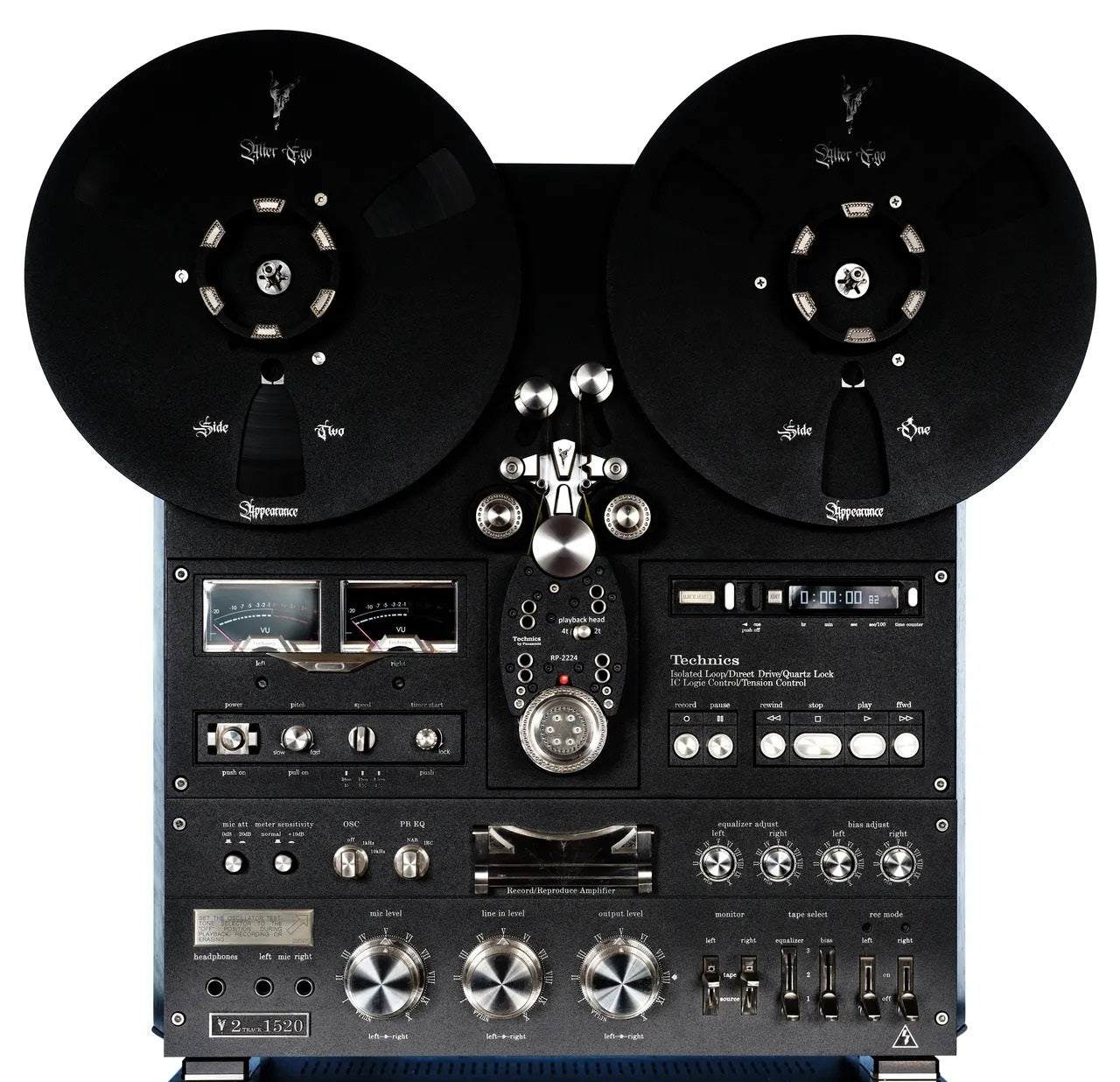
3. Technics RS-1500
The engineering masterpiece from Japan
The Technics RS-1500 series occupies a special place in reel-to-reel history.
Technics approached tape transport engineering with the same intensity the company applied to its great direct-drive turntables.
The result was one of the most distinctive tape paths ever fitted to a domestic or semi-professional reel recorder.
Instead of following the conventional arrangement seen on many decks, the Technics isolated-loop transport wrapped the tape around a large central capstan area with separate pinch rollers controlling the tape path.
The goal was simple:
Make tape movement exceptionally stable.
The result looked unlike almost anything else.
A machine built around the tape path
This is what makes the RS-1500 so fascinating.
With many hi-fi components, the electronics provide the central story.
With the Technics, the transport itself is the star.
Watching tape travel through the isolated-loop system provides a direct visual explanation of the engineering philosophy.
Technics was attempting to control the section of tape passing the heads as precisely as possible while reducing the influence of the large supply and take-up reels.
The architecture gave the RS-1500 family a visual identity that remains instantly recognisable.
Audiophile relevance today
The Technics RS-1500 series has enjoyed an unusual second life within contemporary high-end analogue audio.
Well-restored machines are frequently associated with playback of modern two-track master-tape releases, and the platform has inspired extensive restoration and modification work.
This continuing audiophile interest is significant.
The RS-1500 is no longer appreciated merely because it is old.
It is appreciated because the fundamental transport design remains compelling.
That is the mark of genuine engineering.
2. Ampex ATR-102
The mastering-room legend
At this point we leave the world of conventional hi-fi almost completely.
The Ampex ATR-102 belongs to the professional mastering studio.
Ampex was one of the foundational names in American magnetic recording, and the ATR series represented the culmination of decades of professional tape-machine development.
The ATR-102 became deeply associated with stereo mastering.
Here the priorities were very different from those of a consumer recorder.
There was no need for decorative auto reverse.
No need to resemble living-room furniture.
No need to impress somebody browsing a hi-fi showroom.
The machine needed to reproduce master tape accurately, repeatedly and reliably.
The mastering machine
That distinction is fundamental.
A mastering recorder occupies one of the most critical positions in the analogue production chain.
Everything that happened during the recording sessions ultimately passes through this stage.
Noise, instability, alignment errors or mechanical inconsistency can affect the final master.
Professional machines therefore represent tape engineering at its most uncompromising.
The ATR-102 became one of the machines against which other professional two-track recorders are still discussed, including the Studer A820. (Best Audio Video Forum)
Collector versus professional instrument
Calling an ATR-102 a “collectible” almost understates the machine.
A vintage automobile can be both collectible and capable of racing.
A grand piano can be both historic and capable of concert performance.
The ATR-102 occupies a similar position.
Its value comes from what it can still do.
For serious analogue mastering enthusiasts, the machine represents much more than nostalgia.
It represents the professional origin of the format.
1. Studer A820
The summit of analogue tape engineering
And finally, the Studer A820.
If reel-to-reel recorders can be described as mechanical works of art, the A820 belongs among the masterpieces.
This was not designed to be an extravagant domestic hi-fi component.
It was created as a professional recording instrument at a time when decades of accumulated knowledge about magnetic tape could be combined with sophisticated electronic control.
The A820 represents the mature Studer philosophy:
precision transport,
careful tape handling,
professional alignment capability,
advanced control,
serviceability,
and engineering intended for environments where failure could interrupt an expensive recording or mastering session.
The A820 remains regularly mentioned alongside machines such as the Ampex ATR-102 when enthusiasts discuss the pinnacle of professional analogue tape reproduction. (PS Audio)
Why the A820 deserves the final position
Great engineering often becomes visually inevitable.
When you look at an A820, there is remarkably little decoration.
Yet the machine has enormous presence.
Large reels sit above a transport engineered around complete control of magnetic tape.
The control surface communicates information rather than decoration.
Everything exists for a reason.
That is precisely what makes it beautiful.
The Studer does not imitate professional equipment.
It is professional equipment.
And that distinction places it in a different category from almost every consumer recorder ever produced.
The reference standard
For many enthusiasts, owning an A820 is unnecessary.
It is large.
It is complex.
Professional maintenance knowledge is important.
And operating one properly requires considerably more understanding than simply pressing Play on a domestic deck.
But greatness is not determined by convenience.
The A820 represents what happened when reel-to-reel technology was pushed toward its mature professional conclusion.
For that reason, it deserves its position at the summit of this collection.
Ten Machines — Ten Different Definitions of Greatness
Looking across these ten machines reveals something important.
There was never one universal definition of the perfect reel-to-reel recorder.
Sony TC-880-2 represents exclusivity and uncompromising Japanese engineering.
Akai GX-747 represents visual drama and the luxury consumer tape era.
Nagra IV-S represents portable professional precision.
TEAC X-2000R represents the sophisticated final generation of domestic open-reel technology.
Pioneer RT-909 represents industrial design elevated into kinetic art.
Otari MX-5050 represents the dependable studio workhorse.
Revox B77 Mk II represents Swiss engineering brought within reach of serious enthusiasts.
Technics RS-1500 represents radical transport engineering.
Ampex ATR-102 represents the American mastering tradition.
And Studer A820 represents the extraordinary final maturity of professional analogue recording.
Different missions.
Different engineering philosophies.
One medium.
Magnetic tape.
What Makes a Great Reel-to-Reel Machine?
For today’s collector, specifications alone cannot determine greatness.
A machine should be considered as a complete system.
Transport stability matters.
Head condition matters.
Tape handling matters.
Electronics matter.
Mechanical condition matters.
Availability of replacement parts and experienced technicians matters enormously.
And intended format matters perhaps most of all.
A beautifully restored quarter-track consumer recorder and a professional half-track 15 ips mastering machine were designed to accomplish different things.
Comparing them purely by specification misses the historical point.
The great reel-to-reel machines should instead be understood according to what their designers were attempting to achieve.
When viewed that way, the enormous diversity of analogue tape engineering becomes part of its fascination.
The Collector’s Golden Rule: Condition Before Reputation
There is one principle every new reel-to-reel collector eventually learns:
The name on the front panel does not determine how the machine sounds today. Its condition does.
These recorders are now vintage electromechanical instruments.
A famous model that has been neglected for decades may perform far worse than a less prestigious machine that has been professionally restored, aligned and maintained.
Bearings age.
Capacitors drift.
Rubber components deteriorate.
Brakes require adjustment.
Tape tension changes.
Heads wear.
Switches oxidise.
Lubricants harden.
Calibration changes.
For that reason, purchasing a reel-to-reel recorder should never be treated exactly like purchasing an ordinary vintage amplifier.
The transport is a mechanical system.
Its condition is fundamental.
Documentation of restoration and calibration can therefore be more valuable than a cosmetically perfect front panel.
The Tape Matters Just as Much
A great machine cannot create information that does not exist on the recording.
This becomes particularly important when listening to contemporary master-quality reel-tape releases.
A professionally duplicated two-track tape running at 15 ips is fundamentally different from the mass-market prerecorded quarter-track tapes that populated much of the consumer market decades ago.
Tape formulation, recording level, equalisation standard, track format, duplication generation and machine calibration all influence the final result.
The serious collector therefore eventually stops asking only:
“Which tape recorder is best?”
and begins asking:
“Which machine is best for the tapes I actually want to play?”
That is a much more useful question.
Why Reel-to-Reel Still Matters
Reel-to-reel listening asks something from the listener that modern digital playback does not.
You choose the tape.
You mount the reels.
You thread the transport.
You check the tape path.
You press Play.
And then the machinery becomes part of the experience.
The reels slowly exchange their positions while the music unfolds.
Nothing happens instantly.
Nothing encourages skipping every thirty seconds.
The physical length of the tape becomes the physical length of the performance.
That ritual is one reason reel-to-reel continues to fascinate enthusiasts long after magnetic tape ceased to be the world’s dominant recording medium.
But ritual alone would not have kept the format alive.
The deeper attraction remains the connection with the original recording process.
For most of modern recording history, professional magnetic tape was not an exotic audiophile format.
It was the working medium.
It was where performances lived.
And when a high-quality tape is reproduced on a correctly restored and calibrated machine, that historical connection becomes extraordinarily tangible.
Final Verdict
Choosing the single greatest reel-to-reel recorder ever made will always involve personal judgement.
The collector might choose the Akai GX-747.
The industrial-design enthusiast might choose the Pioneer RT-909.
The home analogue purist might choose the Revox B77.
The transport enthusiast might choose the Technics RS-1500.
The location-recording historian might choose the Nagra IV-S.
The mastering engineer might argue for the Ampex ATR-102.
But when the entire history of professional reel-to-reel engineering is considered — transport sophistication, tape handling, studio pedigree, flexibility and uncompromising construction — the Studer A820 stands comfortably among the greatest analogue tape machines ever created.
And perhaps that is the most important lesson of this entire collection.
Reel-to-reel was never simply one technology.
It was an engineering world.
From portable Nagras capturing performances in the field to Studers turning inside mastering rooms, from glamorous Akai and Pioneer machines illuminating home listening rooms to Otaris working day after day in studios, these machines tell the story of an era when recorded music depended on moving magnetic tape with extraordinary precision.
Today the reels continue to turn.
Not because the world failed to invent anything newer.
But because, at its very best, analogue tape became something worth preserving.
Open Reel.
Magnetic Tape.
Mechanical Precision.
The Sound of the Master.
Top 10 at a glance
- Sony TC-880-2 — The rare Japanese statement recorder
- Akai GX-747 — The visual icon
- Nagra IV-S — Portable professional precision
- TEAC X-2000R — The sophisticated consumer flagship
- Pioneer RT-909 — Kinetic industrial design
- Otari MX-5050 — The professional workhorse
- Revox B77 Mk II — Swiss precision for the serious enthusiast
- Technics RS-1500 — The isolated-loop engineering masterpiece
- Ampex ATR-102 — The mastering legend
- Studer A820 — The summit of professional analogue tape.
Copyright of Open Reel To Reel Hub - All Rights Reserved.
 Спілкуйтеся з нами
