













![Nagra 75th Anniversary Collection Album [UHQCD]](http://www.thesoundoftape.com/cdn/shop/files/UHQCD_600x600_cover_front_80x80.png?v=1791014990)


BASE2 MUSIC: ERIK SATIE, FROM ANALOGUE TAPE TO 45 RPM VINYL
A piano, magnetic audio reel tape and a carefully cut lacquer: Base2 Music’s announcement of its second LP Record offers a welcome glimpse into the craft behind an analogue record. The project features pianist Mahya Mhr performing Erik Satie’s Gnossiennes and Nocturnes, with a production approach that places the original tape recording at the centre of the process.
Satie is an especially compelling choice for this treatment. His piano music invites close attention to touch, phrasing and the space between notes. Its apparent simplicity gives the performer little room to hide: the weight of a chord, the pacing of a melody and the fading resonance of the instrument all contribute to its expression.
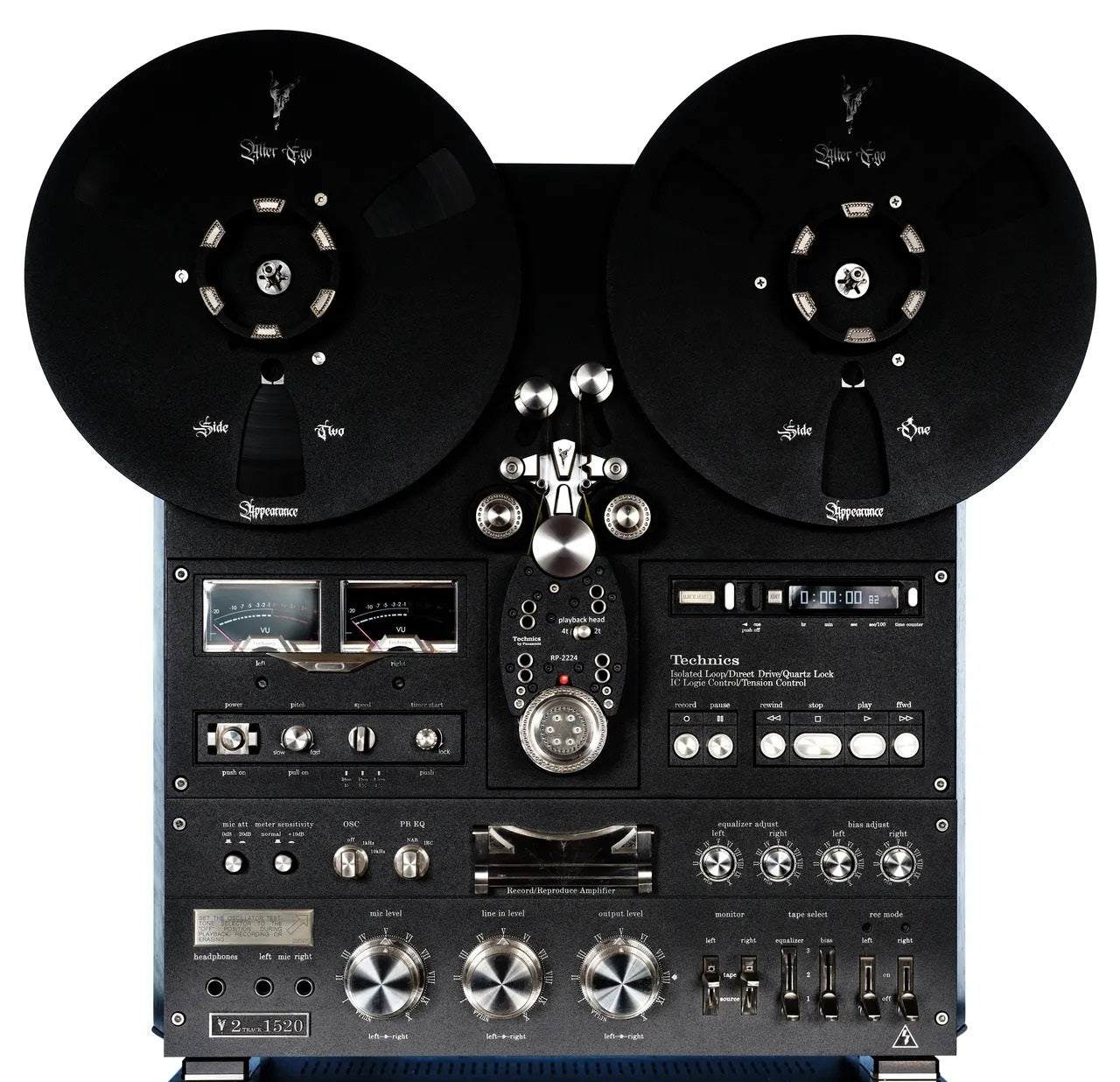
According to Base2 Music’s production account, the performances were recorded directly onto RTM magnetic tape at 15 ips - 38.1 cm/s - through an entirely analogue signal chain. The recording was then edited by hand using a razor blade and tape splices. This is physical editing of the recorded performance, requiring precise decisions about where each passage begins and ends.
Crucially, the label states that the lacquer was cut from the first-generation tape, rather than a duplicate. That preserves a direct connection to the original recording and avoids an additional tape-copy generation.
The announcement identifies Noel Summerville at Studio 33/45 in Peckham as the engineer cutting the lacquer. Here, the electrical signal played from the tape drives the cutting head, which inscribes the music into a continuous groove. The lacquer is the master from which the metal parts for pressing are made; it is not the finished vinyl record.
Base2 Music describes a planned one-step plating process. After the lacquer receives a conductive coating, a metal negative is produced and prepared for use as the pressing stamper. This avoids the additional mother-and-stamper replication stages used in conventional three-step production. “One-step” therefore describes the metalwork process, while the all-analogue claim describes the audio signal’s journey.
The lacquer is being cut at 45 rpm. At a given groove radius, that higher rotational speed provides more groove length per second of music than 33⅓ rpm, giving the cutting engineer useful scope for preserving demanding musical information. The finished result will also depend on the recording, mastering decisions, pressing quality and playback setup.
For listeners who value recording provenance, this project offers an unusually tangible story: a performance captured on tape, assembled through physical splices and carried from the original recording to the cutting lathe.
The real promise, however, lies in the repertoire. Satie’s music asks us to slow down and listen closely. A production built around that same patience feels entirely appropriate.
What draws you most to a piano recording - the interpretation, the instrument’s tone, or the sense of being present in the room?
#Base2Music #ErikSatie #MahyaMhr #AnalogueRecording #45RPM #OneStepVinyl #RTMTape #PianoMusic #TheSoundOfTape
 Chat With Us
