











MIGUEL KERTSMAN - PARADOXES

|
THE SOUND OF TAPE — ALBUM EDITOR REVIEW
Some albums cross musical boundaries. Paradoxes seems determined to erase them altogether.
Brazilian-American composer, producer and multi-keyboardist Miguel Kertsman has created a bold concept album in which progressive rock, jazz fusion, Western classical music, Brazilian influences and vintage electronic sound exist in constant—and fascinating—tension.
Released in 2025, Paradoxes explores contradictions found in science, time, human behaviour and modern society. Its opposing titles—“Jubilant Anxiety,” “Fanfare in Quietude,” “Atemporal Ocean,” “Then Is Now” and “Nostalgic Future”—are not merely clever wordplay. They provide the architecture for an album that continually moves between order and chaos, reflection and urgency, acoustic intimacy and synthesizer-driven grandeur.
THE MUSIC
The opening “Enclosed Pathways” immediately establishes the album’s scale: restless rhythms, shifting structures and vintage keyboards unfold like passages through an elaborate musical maze.
The solo-piano beauty of “Postlude, Letting Go” reveals Kertsman’s classical foundation before “Still Currents” launches the listener back into a brighter, more rhythmically animated soundscape.
“Red Blue Sky,” featuring the commanding voice of Drew Sarich, is among the album’s most accessible moments. Its vocal harmonies and melodic strength carry a thoughtful reflection on political polarization, division and the possibility of empathy.
That tension becomes more physical in “Liquid Fire,” a powerful progressive rocker whose surging drums, vocal storytelling and atmospheric keyboards evoke the anxiety of life aboard what Kertsman calls “Spaceship Earth.”
“Atemporal Ocean,” featuring Loren “Saiphe” Kertsman, connects the project to musical ideas Miguel first explored on his 1982 Brazilian debut, Música, Mito, e Mistério. Past and present genuinely meet here.
The closing combination of “i-Clock” and “Postlude, De-clocking” completes the album’s meditation on time. The first brings space-funk energy and Miguel’s own vocal performance; the second slowly dissolves conventional motion into an atmospheric, almost weightless conclusion.
VINTAGE INSTRUMENTS—A LIVING PERFORMANCE
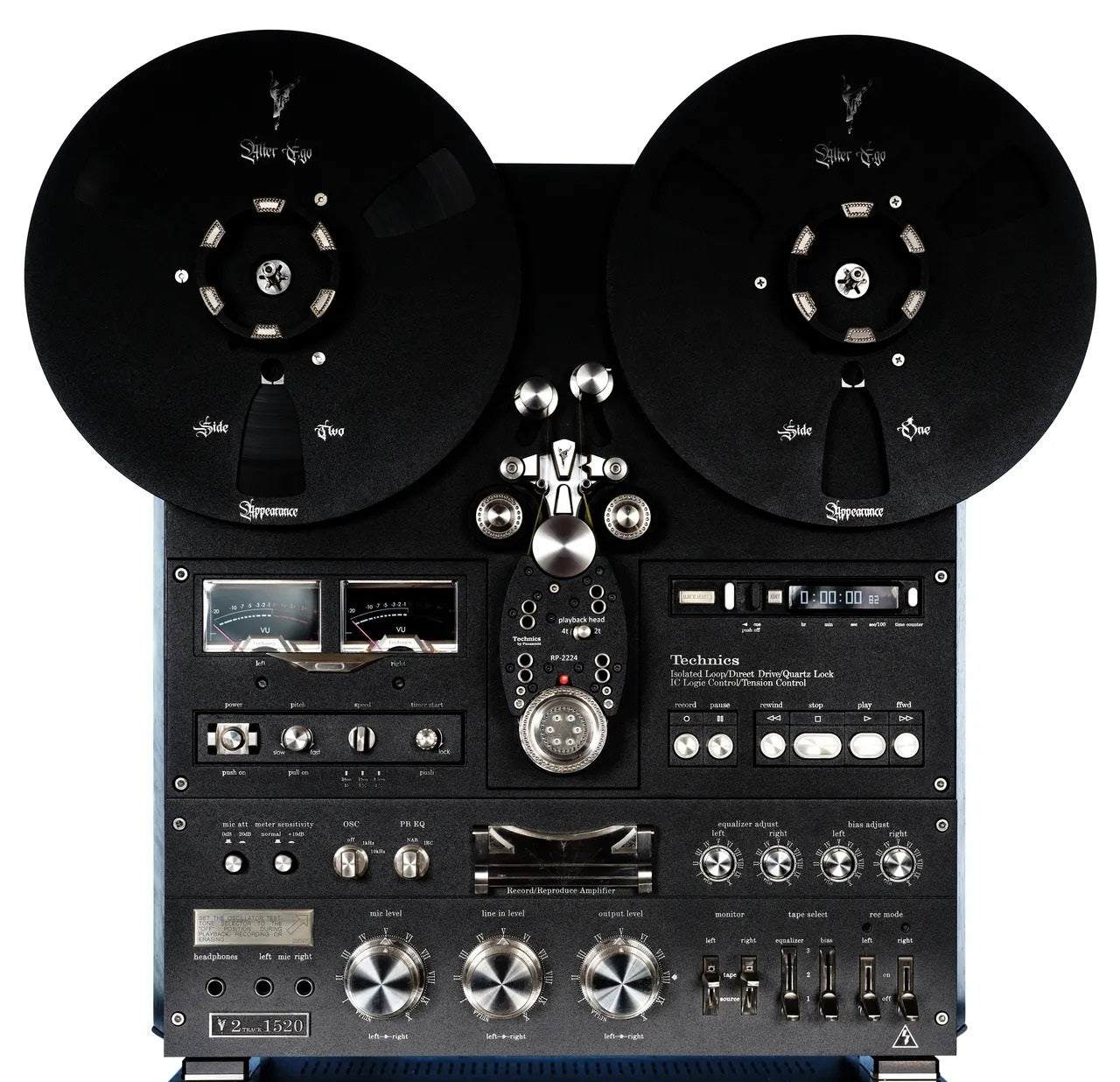
A major part of the album’s character comes from its recording method. The musicians performed live in the recording space with only a limited number of microphones, using original vintage instruments rather than software imitations.
Kertsman’s formidable collection includes:
🎹 Grand piano
🎹 Harpsichord
🎹 Pipe organ
🎹 Minimoogs
🎹 Mellotron
🎹 Sequential Circuits Prophet-10
🎹 Additional vintage analogue keyboards and synthesizers
The result is warm, physical and unmistakably human. The performances breathe, the instruments retain their natural dimensions, and the music possesses the energy of musicians reacting to one another in real time.
MUSICIANS AND CONTRIBUTORS
Available album and individual-track credits identify:
• Miguel Kertsman — composer, lyricist, producer, vocals, piano, organ, harpsichord and analogue keyboards
• Drew Sarich — vocals
• Loren “Saiphe” Kertsman — vocals
• Stefan Bernheimer — guitar
• Helmut Schartlmüller — bass guitar
• Titus Vadon — drums
• Michael Schatzmann — drums
• Matheus Jardim — drums
The personnel varies across the individual compositions, giving each part of the album a distinctive rhythmic and emotional personality.
TRACKLIST
1. Enclosed Pathways
2. Postlude, Letting Go
3. Still Currents
4. Red Blue Sky
5. Jubilant Anxiety
6. Fanfare in Quietude
7. Liquid Fire
8. Atemporal Ocean
9. Postlude, Waterverse
10. Then Is Now
11. Postlude, Nostalgic Future
12. i-Clock
13. Postlude, De-clocking
Selected physical editions also contain:
14. Red Blue Sky — Single Edit
15. Liquid Fire — Single Edit
EDITOR’S VERDICT
Listeners may hear echoes of Yes, Genesis, Pink Floyd, Gentle Giant, Camel, ELP and Rick Wakeman, while some of the electronic passages recall the expansive imagination of Isao Tomita. These are useful reference points, but Paradoxes never sounds like a simple exercise in nostalgia.
Kertsman uses the vocabulary of classic progressive rock to construct something personal: a contemporary meditation on time, uncertainty, division, memory and the contradictory nature of human experience.
The response from progressive-music reviewers has been enthusiastic. The JW Vibe described the record as a “sonic marvel,” praising its adventurous scope and the energy of its live studio performances. Other coverage has highlighted its warm analogue sound, virtuosity, long-form storytelling and refusal to remain inside a single genre.
This is not background music. It is an album that rewards uninterrupted listening, preferably through a revealing stereo system or an excellent pair of headphones. Its intricate arrangements reveal more with every return visit.
Paradoxes is intellectually ambitious without sacrificing emotion, technically accomplished without becoming sterile, and unmistakably retro without being trapped in the past.
⭐ EDITOR’S RATING: 4.5/5
Which track draws you deepest into the world of Paradoxes: “Enclosed Pathways,” “Red Blue Sky,” “Liquid Fire,” “Atemporal Ocean” or “i-Clock”?

|
