


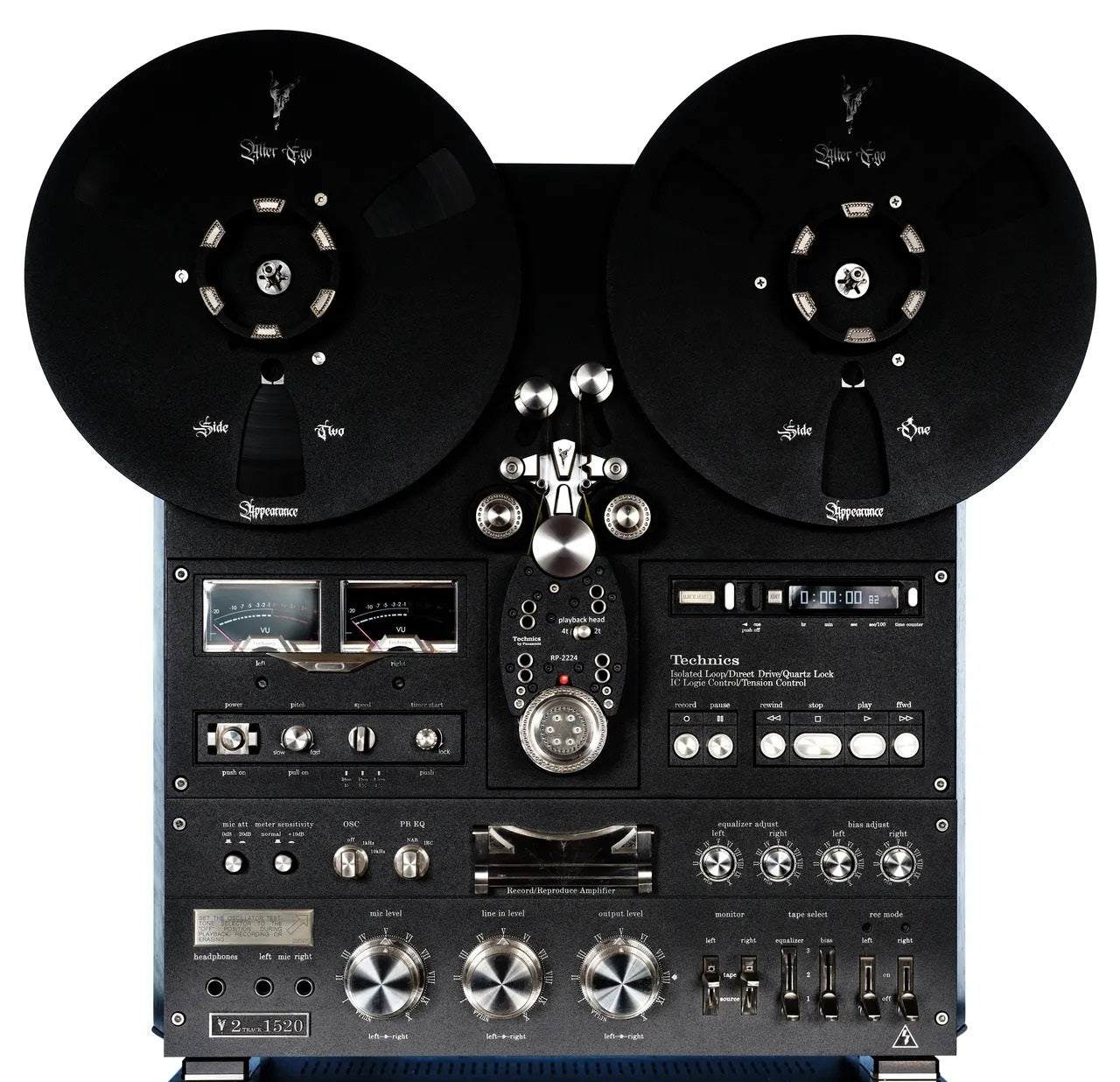











Soon, a new release as 2x45 RPM DLP and Master Reel Tape Copy on SM911 magnetic tape.
Pierre Fournier’s cello recitals are consistently lauded for their aristocratic elegance, refined musicality, and warm, "golden" tone. Often described as a master stylist, Fournier delivers deeply communicative performances characterised by subtle emotional shifts and impeccable technique rather than flamboyant display.
Critics often contrast Fournier with contemporaries like Casals, noting that while Casals "plays the cello," Fournier "plays the sonata," prioritising the music's structural line over overt technical display. His bowing is described as supple, unshowy, and never sacrificing nuance for speed. Pierre Fournier's Cello Recital recordings are widely regarded as definitive examples of his "aristocratic" style, characterised by an elegant, mellifluous tone and refined phrasing. Reviewers frequently praise his unique ability to string musical phrases into long, continuous "sentences" that maintain a sense of noble momentum.
| The Best Playing: Debussy, Stravinsky, Bloch, Faure, and Ravel |

|
Pierre Léon Marie Fournier was a French cellist who was called the "aristocrat of cellists" on account of his elegant musicianship and majestic sound. This album is available on 2xLPs 45RPM and SM911 Master Reel Tape Copy - The best sound quality.
Album: Pierre Fournier - Cello Recital - Vol. 1
Format: 2xVinyl, LP, 45 RPM, Album, Mono, Stereo, Reissue, Import
Series: Armenian Radio Archive Series - AUDIOPHILE EDITION
Country: Switzerland
Released: 2026
Genre: Classical
Style: Baroque, Modern, Impressionist
| AUDIOPHILE EDITION |

|
| AUDIOPHILE QUALITY SOUND VINYL |

|
Piano – Naum Walter
Violoncello – Pierre Fournier
Pierre Fournier is a very well-respected and much-loved virtuoso cellist. Commentators often characterise him as aristocratic, which would seem appropriate viewing his photos. The accompanying notes describe him as very self-critical. He desires to preserve a sense of continuity during the recording process.
Long phrases and a sense of continuous momentum across the Suites bear this out.
Pierre Fournier (June 24, 1906 – January 8, 1986) was a French cellist who was called the "aristocrat of cellists" on account of his elegant musicianship and majestic sound.
Pierre Léon Marie Fournier was born into a military family. His father was a general; his mother was musical and taught him piano lessons. At the age of 9, he suffered a mild attack of polio. Weakness of his legs made pedalling the piano difficult. So he turned to the cello, and after making rapid progress, he was admitted to the Paris Conservatoire. His teachers there were Paul Bazelaire and Anton Hekking; he graduated in 1924 at the age of 17. Fournier made his debut the year after his graduation. This was a solo appearance with the Concerts Colonne Orchestra, which received favourable notices. The almost invariable comment in reviews was the perfection of his bowing technique. He began a successful career as a touring concert artist and as a performer in chamber music concerts, gaining a great reputation in Europe.
In 1937 to 1939, he was the director of cello studies at the Ecole Normal. It was often said that he became a friendly rival with his contemporary, cellist Paul Tortelier, and after attending a Tortelier concert, he remarked to him, "Paul, I wish I had your left hand." Tortelier responded, "Pierre, I wish I had your right." To Fournier, the secret of his great right hand (i.e., bowing technique) was keeping the elbow high, holding the bow firmly, but allowing the hand and arm to move fluidly. He prescribed the Sevcik violin bowing studies for his cello students.
In 1941, he became a member of the faculty at the Paris Conservatoire, but during the war years, his concert touring career was impossible. Once the war was over, though, was able to resume and he rapidly increased in fame and international stature. His old audience found that he had grown in artistic depth. Hungarian violinist Joseph Szigeti, meeting Fournier in rehearsals for a 1947 Edinburgh Festival appearance, had not heard him for over ten years and wrote that he was "tremendously impressed by the Apollonian beauty and poise that his playing had acquired in the intervening years. Szigeti, Fournier, violist William Primrose, and pianist Artur Schnabel formed a piano quartet in those years and gave some fabled concerts at which they played virtually all of Schubert's and Brahms' piano chamber music. Sadly, the BBC acetate air checks of this cycle were allowed to deteriorate and have been lost.
Fournier made his first U.S. tour in 1948. His chamber music partner Artur Schnabel spread the word among cellists, other musicians, and critics that they were to be visited by a great new cellist. The New York and Boston critics were ecstatic. He had to give up his Conservatoire post because of his expanding concert career; he appeared in Moscow for the first time in 1959. Commentator Lev Grinberg wrote that he was notable for a romantic interpretation; clarity of form, vivid phrasing, and clean, broad bowing all "aimed at revealing the content."
He had a broad repertoire, including Bach, Boccherini, the Romantics, Debussy, Hindemith, and Prokofiev. Composers Martinu, Martinon, Martin, Roussel, and Poulenc all wrote works for him. He had a standing Friday night date to privately play chamber music with Alfred Cortot, the eminent French pianist, at which they might be visited by musicians like Jacques Thibaud. In 1953, he became a Chevalier of the Legion of Honour and was promoted to officer in 1963.
In 1972, he retired to Switzerland and gave master classes. He still gave concerts, even as late as 1984 when he was 78, and a London critic praised the fluency of his playing and his strong and solid left-hand technique.
The LP Record Features:
Armenian Radio Archive Series
From the Original Master
Pressed at MEK Vinyl
First Time Ever On Vinyl
The Fixed Pitch Mode
Unpublished Materials
Swiss Import
| This album was recorded, mastered, cut and pressed in Switzerland. |

|
Triston Masters powered by SCHOPPER third generation in the analogue domain with a passion for vintage analogue high-fidelity gear and equipment. Triston Masters Recording are a Swiss label living with analogue music reproduction since 1923 in a professional studio in Switzerland, and only uses the very best audiotapes: RecordingTheMasters’ SM911 for master recording, first-generation duplication and making copies from high-quality master tapes.
Printed in Switzerland
Made in Switzerland
Pierre Fournier - Cello Recital - Vol. 1 · Triston Masters · Made In Switzerland
All rights reserved - phonographic manufacturer and registered owner of the work. Unless specific permits are prohibited, duplication, hire-lease, loan and use of this phonographic support for public performance and broadcasting.
All image and audio content is used by permission of the copyright holders or their agents, and/or according to fair dealing as per the UK Copyright, Designs and Patents Act 1988.
Music For Life | Audiophile Quality Master Reel Tape | This is our greatest music passion: Anyone who loves music wants not just to hear it, but to experience it - www.thesoundoftape.com
 Chat With Us
