












TECHNICS RS-1800 — THE BUYER’S GUIDE

Including current values, Technics RS-1800 vs RS-1500 vs RS-1520 vs RS-1700 comparison, common faults, restoration points and what to check before buying.
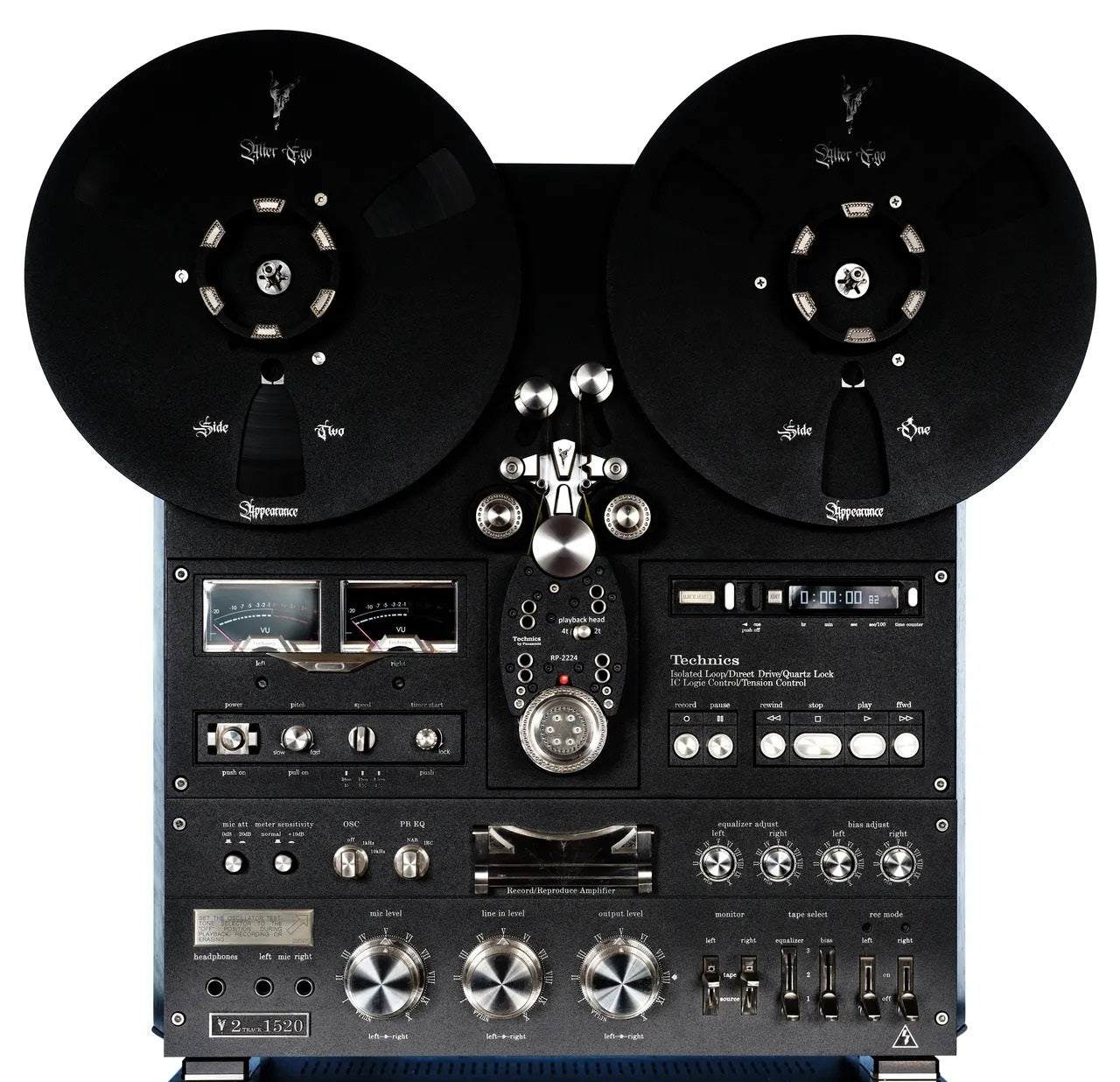
The Technics RS-1800 is the machine to buy if you want the ultimate factory Technics open-reel recorder rather than simply the most practical Technics for everyday tape listening.
It is exceptionally rare, enormously over-engineered, capable of 30 ips / 76 cm/s, and substantially more complex than the RS-1500, RS-1520 and RS-1700.
Technics built it as a two-piece system: a transport plus separate electronics unit. The complete system weighs more than 50 kg before accessories, cases and reels.
It records and plays 2-track stereo, provides 4-track stereo playback, accepts 10.5-inch reels and runs at 7½, 15 and 30 ips.
Its 30 ips capability is one of the features that makes the RS-1800 particularly special.
For someone primarily interested in modern 15 ips half-track master-tape copies, however, there is an important question:
Is the RS-1800 actually a better purchase than an RS-1520?
For sound and collectability, potentially yes.
For ownership practicality and value, often no.
TECHNICS RS-1800 AT A GLANCE
Configuration:
Separate transport + electronics
Recording:
2-track stereo
Playback:
2-track + 4-track stereo
Speeds:
7½ / 15 / 30 ips
Maximum reel:
10.5-inch
Drive:
Quartz-locked direct-drive capstan
Tape transport:
Technics Isolated Loop
Reel motors:
Direct drive
Connections:
Balanced XLR and unbalanced RCA
30 ips:
Yes
Transport weight:
Approximately 36 kg
Electronics weight:
Approximately 16.6 kg
Total:
Approximately 52.6 kg
The RS-1800 also incorporated unusually sophisticated facilities including manual and automatic tape calibration, calibration/peak displays and variable-speed control.
RS-1800 VS RS-1500 VS RS-1520 VS RS-1700
TECHNICS RS-1500
Main purpose:
Audiophile / semi-professional
Speeds:
3¾ / 7½ / 15 ips
30 ips:
No
10.5-inch reels:
Yes
Isolated Loop:
Yes
Direct-drive capstan:
Yes
Auto reverse:
No
Complexity:
High
Best for:
Classic Technics isolated-loop engineering, serious listening and relatively practical ownership.
TECHNICS RS-1520
Main purpose:
Semi-professional / master-tape playback
Speeds:
3¾ / 7½ / 15 ips
30 ips:
No
10.5-inch reels:
Yes
Isolated Loop:
Yes
Direct-drive capstan:
Yes
Auto reverse:
No
Balanced connections:
Yes
Best for:
15 ips 2-track master tapes and serious audiophile use.
TECHNICS RS-1700
Main purpose:
Flexible auto-reverse listening
Speeds:
3¾ / 7½ / 15 ips
30 ips:
No
10.5-inch reels:
Yes
Isolated Loop:
Yes
Direct-drive capstan:
Yes
Auto reverse:
Yes
Best for:
Versatile playback, conventional 4-track libraries and long listening sessions.
TECHNICS RS-1800
Main purpose:
Flagship semi-professional recorder
Speeds:
7½ / 15 / 30 ips
30 ips:
Yes
10.5-inch reels:
Yes
Isolated Loop:
Yes
Direct-drive capstan:
Yes
Balanced XLR:
Yes
Auto calibration:
Yes
Complexity:
Very high
Best for:
Collectors, serious analogue enthusiasts and anyone wanting the ultimate Technics open-reel machine.
MY RANKING
For modern 15 ips 2-track master tapes:
RS-1520 ≈ RS-1800 > RS-1500 > RS-1700
For engineering and collectability:
RS-1800 >>> RS-1520 > RS-1700 / RS-1500
For everyday ownership:
RS-1500 / RS-1520 > RS-1700 >>> RS-1800
For mixed 2-track and 4-track collections:
RS-1520 is arguably the sweet spot.
For absolute “I want the ultimate Technics” appeal:
RS-1800.
CURRENT UK VALUES — AUGUST 2026
Important:
The RS-1800 market is extremely thin. There are not enough genuine complete UK sales each month to establish a firm market price, so RS-1800 figures should be treated as collector-market estimates.
TECHNICS RS-1500 — APPROXIMATE UK VALUES
Project / untested:
£700–£1,200
Working, unrestored:
£1,200–£1,800
Very good / serviced:
£1,800–£3,000
Proper professional restoration:
£3,000–£6,000+
Extreme bespoke restoration:
£8,000+
TECHNICS RS-1520 — APPROXIMATE UK VALUES
Project / unknown:
£1,200–£2,000
Working original:
£2,000–£3,500
Good serviced example:
£3,000–£5,000
Properly restored / calibrated:
£4,500–£7,500+
Bespoke audiophile rebuild:
Potentially £10,000–£20,000+
TECHNICS RS-1700 — APPROXIMATE UK VALUES
Project:
£1,000–£1,800
Working original:
£1,800–£2,800
Excellent / serviced:
£2,500–£4,000
Fully restored:
£3,500–£5,500+
TECHNICS RS-1800 — APPROXIMATE UK VALUES
Incomplete / major project:
£4,000–£7,000
Complete but unrestored:
£7,000–£12,000
Good functioning original:
£10,000–£15,000
Excellent serviced / restored:
£15,000–£22,000+
Exceptional complete collector specimen:
£20,000–£30,000+ possible
These RS-1800 figures are indicative rather than fixed market prices because transaction volume is extremely low.
THE NUMBER-ONE RS-1800 BUYING RULE
Never value an RS-1800 simply because it “powers on.”
With any vintage reel-to-reel deck, “powers on” means very little.
With an RS-1800 it means almost nothing.
You are buying:
Transport
Electronics
Headblock
Rare mechanical parts
Rare controls
Calibration circuitry
Cosmetics
Accessories
Service history
One missing RS-1800-specific assembly can turn an apparent bargain into a very expensive display piece.
1. CHECK THE HEADBLOCK FIRST
This is critical.
Inspect:
Record head
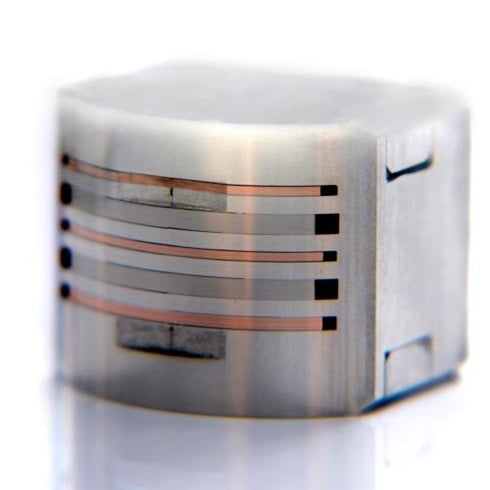
2-track playback head
4-track playback head
Erase head
Headblock
Mounting hardware
Wiring and connectors
Tape guides around the head area
Look closely at head wear.
You want a smooth curved surface.
A narrow polished contact band is normal.
A large flat wear patch is not.
Severe head wear can cause:
Loss of high-frequency response
Altered head contour
Poor tape contact
Channel imbalance
Poor azimuth performance
Need for relapping
Ultimately, head replacement
Replacement RS-1800-specific head assemblies are not something you want to discover you need after purchase.
2. TEST TAPE TENSION
The Technics isolated-loop design depends upon correct tape handling.
Both tension arms should operate smoothly.
During PLAY, the tape should sit calmly and consistently through the head area.
Avoid machines showing:
Fluttering tape
Hunting
Bouncing
Vertical tape wandering
Slack
Aggressive pulling
Unstable tension
Poor tension can come from mechanical wear, incorrect adjustment, contaminated rollers or electronic faults.
3. INSPECT BOTH PINCH ROLLERS
Check for:
Glazing
Cracking
Hardness
Deformation
Flat spots
Sticky rubber
Asymmetric wear
Pinch-roller condition and adjustment are particularly important to maintaining the Technics isolated tape loop correctly.
4. TEST EVERY SPEED
For the RS-1800, test:
7½ ips
15 ips
30 ips
Do not buy it as an operational machine without checking all three.
30 ips is one of the central reasons the RS-1800 is special.
Listen for:
Delayed engagement
Unstable speed
Speed hunting
Mechanical vibration
Capstan bearing noise
Speed-dependent faults
5. TEST BRAKING
Load an expendable tape.
Run fast-forward.
Press STOP.
Run rewind.
Press STOP.
Repeat several times.
The reels should decelerate in a controlled manner without creating a pile of loose tape.
Watch for:
Weak braking
Tape spill
Uneven stopping
One reel stopping much later than the other
Mechanical noise
6. LISTEN TO THE REEL MOTORS
During PLAY, the transport should feel composed and smooth.
During fast-forward and rewind, listen for:
Grinding
Scraping
Bearing rumble
Clicking
Oscillating tension
Rapidly changing motor noise
Parts availability is far more limited than for something like a Revox B77.
7. TEST RECORD AS WELL AS PLAYBACK
Do not assume that beautiful playback means the record section is healthy.
Make a fresh recording.
Compare SOURCE and TAPE.
Test:
Left channel
Right channel
Input level
Output level
Record EQ
Bias
Source / tape monitoring
VU / peak indication
8. CHECK THE CALIBRATION SYSTEM
The RS-1800’s calibration facilities are part of what distinguishes it from lesser machines.
Verify that the manual and automatic tape calibration functions actually work.
If a seller says:
“I’ve never used that feature.”
Treat it as untested, not functional.
9. CHECK XLR AND RCA CIRCUITS
Test:
Balanced XLR inputs
Balanced XLR outputs
RCA inputs
RCA outputs
A beautiful RS-1800 with a dead balanced section is not a fully functional machine.
10. INSPECT CAPACITORS AND POWER SUPPLIES
By 2026 these machines are roughly four-and-a-half decades old.
A proper restoration should inspect:
Electrolytic capacitors
Power-supply regulation
Rectifiers
Relay contacts
Switches
Potentiometers
Connectors
Grounding
Solder joints
Heat-stressed components
Do not automatically assume:
“Fully recapped = perfectly restored.”
A poorly performed recap can be worse than a healthy original machine.
Ask for invoices and exact details of the work carried out.
11. CHECK SWITCH CONTACTS
Symptoms of dirty or worn contacts include:
One channel missing
Crackling
Intermittent recording
Output-level jumps
Meter instability
Mode-dependent channel loss
Exercise every control and switch repeatedly during inspection.
12. INSPECT THE CAPSTAN CAREFULLY
The quartz-locked direct-drive capstan is one of the defining elements of the Technics architecture.
Look for:
Axial play
Radial play
Bearing noise
Damaged shaft
Eccentricity
Inconsistent startup
Instability after warm-up
13. CHECK TAPE GUIDES FOR GROOVES
Run a fingernail lightly across the guides.
Deep grooves indicate substantial usage.
Badly worn guides can affect:
Tape contact
Tape height
Tape edges
Azimuth consistency
Transport stability
Mechanical condition matters more than cosmetics.
14. CHECK METERS AND DISPLAY
Verify:
Both channels read consistently
Illumination works
Meter needles move freely
Calibration display works
Peak indication works
No dead display segments
Display and cosmetic parts can be harder to replace than ordinary electronic components.
15. ORIGINAL ACCESSORIES MATTER
Look for:
Original headblock
Technics NAB adaptors
Reel spacers
Original take-up reel
Covers / cases
Remote
Manuals
Interconnection cabling
Original electronics module
Original hardware
Completeness can materially affect collector value.
WHAT A PROPER RS-1800 RESTORATION SHOULD INCLUDE
1. Transport overhaul
2. Pinch rollers rebuilt or replaced
3. Bearings inspected
4. Brakes serviced
5. Tape guides checked
6. Tension system calibrated
7. Capstan stability verified
8. Reel motor torque and tension checked
9. Controls cleaned and restored
10. Power supply inspected / rebuilt as required
11. Electrolytics checked or replaced as necessary
12. Relays and connectors inspected
13. Heads cleaned and demagnetised
14. Head wear measured
15. Azimuth checked
16. Tape path mechanically aligned
17. Playback calibration
18. Record calibration
19. Bias calibration
20. EQ calibration
21. Level calibration
22. All three speeds tested
23. XLR and RCA circuits tested
24. Extended warm-running test
ASK WHAT TAPE IT WAS CALIBRATED FOR
Do not accept:
“Professionally calibrated.”
Ask:
“Calibrated for what tape?”
Modern possibilities include:
RTM SM900
RTM SM911
ATR Magnetics
Other studio formulations
A machine can be mechanically and electronically healthy but poorly matched to your chosen recording tape.
For playback-only use, playback EQ, reference flux level and azimuth are particularly important.
15 IPS MASTER-TAPE PLAYBACK
This is where these Technics machines become especially interesting.
For contemporary commercially produced:
¼-inch
2-track stereo
15 ips
10.5-inch NAB
master-tape copies, an RS-1800 or properly configured RS-1520 is a superb match.
But make sure of equalisation.
Master tapes may use:
IEC / CCIR
or
NAB
depending on producer.
Do not assume every tape uses the same standard.
DOES 30 IPS SOUND TWICE AS GOOD AS 15 IPS?
No.
30 ips gives the RS-1800 extraordinary technical capability, but it consumes tape at twice the rate of 15 ips.
A 2,500-foot reel runs approximately:
33 minutes at 15 ips
16½ minutes at 30 ips
depending on usable tape length.
For music listening, 15 ips half-track is already an exceptional format.
That is why the RS-1520 versus RS-1800 decision is so interesting.
You do not need 30 ips to enjoy master-tape-quality playback.
WHO SHOULD BUY THE RS-1500?
Buy the RS-1500 if you want:
Classic Technics isolated-loop engineering
Excellent 15 ips capability
Somewhat easier parts and support
Lower purchase price
Audiophile playback without chasing ultimate rarity
Buyer rating:
9/10
WHO SHOULD BUY THE RS-1520?
Buy the RS-1520 if your priority is:
High-quality 15 ips 2-track master-tape playback and recording.
It gives you much of what matters sonically without the RS-1800’s extreme rarity.
For a serious audiophile tape library, it may be the best practical choice of the four.
Buyer rating:
10/10
WHO SHOULD BUY THE RS-1700?
Choose the RS-1700 when versatility comes first.
Its defining advantage is auto reverse.
That makes it excellent for conventional 4-track libraries and long listening sessions.
If your collection is mainly expensive 15 ips 2-track master copies, auto reverse is less important.
Buyer rating:
8.5/10
WHO SHOULD BUY THE RS-1800?
Buy it because you specifically want an RS-1800.
Not because you merely need a great tape machine.
It makes sense for:
Serious Technics collectors
Master-tape collectors
Rare Japanese audio collectors
Professional analogue enthusiasts
Museums and exhibitions
Owners building a flagship analogue system
Someone who genuinely wants 30 ips capability
Someone prepared for specialist maintenance
It is not ideal as a first reel-to-reel machine.
Engineering:
10/10
Collectability:
10/10
Practicality:
5/10
Ownership excitement:
11/10
THE £10,000 QUESTION
Imagine a choice between:
RS-1800
£10,000
Unknown restoration history
versus
RS-1520
£5,000
Professionally restored, mechanically aligned, calibrated and documented
For actual listening, I would buy the restored RS-1520.
Condition beats model number.
However:
RS-1800
Complete
Original
Excellent heads
Professionally restored
Documented calibration
Excellent cosmetics
Correct accessories
£12,000–£15,000
That becomes a very interesting collector purchase.
RS-1800 PRE-PURCHASE CHECKLIST
[ ] Serial numbers photographed
[ ] Both transport and electronics sections present
[ ] Correct headblock
[ ] Head close-up photographs
[ ] No excessive head flats
[ ] Guides not deeply grooved
[ ] Both pinch rollers healthy
[ ] Tension arms operate correctly
[ ] PLAY demonstrated
[ ] STOP demonstrated
[ ] FF demonstrated
[ ] REW demonstrated
[ ] 7½ ips demonstrated
[ ] 15 ips demonstrated
[ ] 30 ips demonstrated
[ ] Two-channel playback demonstrated
[ ] Record function demonstrated
[ ] Source / tape monitoring demonstrated
[ ] Calibration system demonstrated
[ ] Both meters / displays working
[ ] RCA outputs working
[ ] XLR outputs working
[ ] Speed stable after extended warm-up
[ ] Braking demonstrated from fast wind
[ ] No excessive motor or bearing noise
[ ] Service paperwork provided
[ ] Calibration results documented
[ ] Voltage confirmed for UK use
[ ] Safe transport arrangements agreed
TRANSPORT AND SHIPPING
Never ship an RS-1800 casually.
The complete system weighs more than 50 kg across its transport and electronics sections.
Personal collection or professional crated / palletised transport is strongly preferable.
Before transport:
Remove reels
Remove NAB adapters where appropriate
Secure vulnerable components
Protect tension arms
Protect the headblock
Package transport and electronics separately
Use rigid professional packaging
FINAL VERDICT
If your aim is the greatest Technics reel-to-reel ever made:
TECHNICS RS-1800
It represents Technics engineering with very little compromise regarding cost, weight or complexity.
If your aim is the best Technics to actually use regularly with 15 ips master tapes:
TECHNICS RS-1520
followed closely by:
TECHNICS RS-1500
For conventional 4-track listening and convenience:
TECHNICS RS-1700
For an RS-1800 purchase, pay more for:
Documented mechanical condition
Excellent heads
Correct alignment
Professional calibration
Completeness
Original accessories
Service history
rather than cosmetic perfection alone.
A scratched but properly restored machine is a better buy than a museum-looking example with an unknown transport and worn heads.
The Sound of Tape
 Chat With Us
